01Jul/22

The Best Way To Clean Your Storm Drain

If you haven’t pulled out the rake yet this season, chances are it won’t be long. The leaves are already falling and leaving a crisp, colorful mess for you to clean up. But the job isn’t done once you’ve tied off the last bag of leaves from the ground — there are sure to be plenty more stuck in your home’s gutters.

Cleaning out your gutters may feel like a hassle, but getting the job done twice a year will go a long way toward helping you avoid water damage all over your home, especially at your roof-line and in your basement. Contact us at AC Plumbing Construction and read on to learn more about what can go wrong and how to avoid serious problems.

What’s the Worst That Can Happen?

All sorts of debris can land in your gutters. Usually it’s leaves, twigs and seeds, but wind-borne trash like plastic bags can easily end up jamming up the works.

When this happens, the first part of your home in danger of water damage is your roof. Pooling water in your gutters can rot your fascia, shingles and the edge of your roof-line.

During heavy rains, water will eventually spill over the top of the gutter and hit the ground right next to your home. This can cause a trench to form along the edge of your home, affecting grass growth and leaving a wet, muddy mess. During the summertime, this may even attract mosquitoes and other insects that breed in water.

But the biggest problem with over-topped gutters is that the water will saturate the soil right next to your home’s foundation. This can put enormous pressure on the foundation and the walls of your basement, causing cracks that will grow over time. Basement leaks and even floods can directly result from these breaches if the occurs contact AC Plumbing Construction with no hesitation.

Cleanup Time

Most homeowners can take care of their gutters with just two thorough cleanings each year: one in fall and one in spring. But homes with many nearby trees may need more than one cleaning in fall, and it’s important to always keep an eye on your gutters during rainfall to spot signs of clogs or overflowing.

Cleaning your own gutters is easy but messy. It also involves standing on a ladder, so it’s not a great task for those with mobility problems or a fear of heights.

To clean your gutters, begin by observing ladder safety — make sure your ladder is placed on level ground and properly locked in place. Wear comfortable, non-slip shoes.

Hook an empty bucket to the top of the ladder to collect the debris you remove. Wear work gloves, and consider taking along a handheld garden tool like a trowel or hand rake. These can be helpful for scraping waterlogged sludge from the bottom of the gutter.

When the gutter is clear, use a hose to wash it clean and watch to ensure it’s flowing freely through the downspout. If it’s not, you have a clog in the downspout that needs clearing. Use your garden hose at full pressure to hose out the downspout from the bottom up. You might need to remove the bottom section of the downspout to do this. If the hose doesn’t work, a plumbing snake will almost always get the job done.

If gutter problems end up causing moisture issues in your basement, don’t wait to address the situation — it will only get worse. Reach out to your local licensed plumbers at AC Plumbing Construction without delay.

…
01Jul/22

Best Ways To Clean Your Storm Drains

If you haven’t pulled out the rake yet this season, chances are it won’t be long. The leaves are already falling and leaving a crisp, colorful mess for you to clean up. But the job isn’t done once you’ve tied off the last bag of leaves from the ground — there are sure to be plenty more stuck in your home’s gutters.

Cleaning out your gutters may feel like a hassle, but getting the job done twice a year will go a long way toward helping you avoid water damage all over your home, especially at your roof-line and in your basement. Contact us at AC Plumbing Construction and read on to learn more about what can go wrong and how to avoid serious problems.

What’s the Worst That Can Happen?

All sorts of debris can land in your gutters. Usually it’s leaves, twigs and seeds, but wind-borne trash like plastic bags can easily end up jamming up the works.

When this happens, the first part of your home in danger of water damage is your roof. Pooling water in your gutters can rot your fascia, shingles and the edge of your roof-line.

During heavy rains, water will eventually spill over the top of the gutter and hit the ground right next to your home. This can cause a trench to form along the edge of your home, affecting grass growth and leaving a wet, muddy mess. During the summertime, this may even attract mosquitoes and other insects that breed in water.

But the biggest problem with over-topped gutters is that the water will saturate the soil right next to your home’s foundation. This can put enormous pressure on the foundation and the walls of your basement, causing cracks that will grow over time. Basement leaks and even floods can directly result from these breaches if the occurs contact AC Plumbing Construction with no hesitation.

Cleanup Time

Most homeowners can take care of their gutters with just two thorough cleanings each year: one in fall and one in spring. But homes with many nearby trees may need more than one cleaning in fall, and it’s important to always keep an eye on your gutters during rainfall to spot signs of clogs or overflowing.

Cleaning your own gutters is easy but messy. It also involves standing on a ladder, so it’s not a great task for those with mobility problems or a fear of heights.

To clean your gutters, begin by observing ladder safety — make sure your ladder is placed on level ground and properly locked in place. Wear comfortable, non-slip shoes.

Hook an empty bucket to the top of the ladder to collect the debris you remove. Wear work gloves, and consider taking along a handheld garden tool like a trowel or hand rake. These can be helpful for scraping waterlogged sludge from the bottom of the gutter.

When the gutter is clear, use a hose to wash it clean and watch to ensure it’s flowing freely through the downspout. If it’s not, you have a clog in the downspout that needs clearing. Use your garden hose at full pressure to hose out the downspout from the bottom up. You might need to remove the bottom section of the downspout to do this. If the hose doesn’t work, a plumbing snake will almost always get the job done.

If gutter problems end up causing moisture issues in your basement, don’t wait to address the situation — it will only get worse. Reach out to your local licensed plumbers at AC Plumbing Construction without delay.

…
Maintenance Of The Water Heater

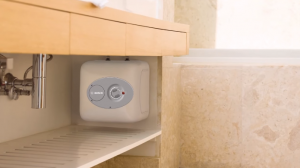
The hot water balloon tanks are made of metal, which, even protected by a coating such as enamel, can be corroded by chlorinated water.

To prevent corrosion that could lead to water heater leakage, some models of water heaters are now equipped with the ACI hybrid dynamic corrosion protection: a magnesium-coated titanium anode is placed in the center of the tank. Magnesium is sprayed permanently on the walls, where it creates a protective barrier.

This barrier is then held in place by the chemical action of the titanium anode. This corrosion barrier is active as soon as the water heater is commissioned and does not require any special maintenance. Even if, with the purchase, a water heater equipped with this technology can be more expensive, it will prove, with the use, impressive on a financial level.

Also, many models are now furnished with “smart” systems: they adapt to the production of hot water according to the pace of life of occupants and know how to manage absences. They can produce the amount of water you need.

With limestone, resistance begins to toil and becomes less powerful. It is therefore recommended to drain the tank and replace the scaled strength as soon as the water heats up less or it takes longer to heat. It is also necessary to ensure the excellent performance of the hot water tank so that it provides optimal comfort and less consumption.

The hot water tanks have a lifespan shorter or longer depending on the mechanisms in place to ensure sustainability and maintenance. Maintenance of this equipment is often neglected; once the failure or leak is declared, the device is often replaced. Do not neglect the insulation of your water heater either.

It is advisable to let the gas, thermodynamic, or solar water heater maintenance to a professional: networks are more complex.

2.How to empty a water heater

  • Turn off the power (electricity, gas …).
  • Stop the circuit breaker or remove the fuse from the water heater.
  • Turn off the water supply and open the faucets in your home.
  • Arrange a vast basin under the balloon or garden hose to drain the water.
  • Open the purge valve, protecting you from splashes and steam.
  • Wait until the balloon is empty (may take about an hour).
  • Close the drain cock.
  • Open the water supply.
  • Close the taps of your home.
  • Wait until the balloon fills up again.
  • Restart the power supply.

3.How to replace a water heater resistor

  • Perform steps 1 / to 6 / above (draining).
  • Remove the cover and memorize the electrical connections.
  • Unscrew the plate, the flange gasket, and unscrew the resistor.
  • Replace the resistor with a new part.
  • Clean the tank and thermostat heater with vinegar and a brush until you get as much limestone as possible.
  • Replace the seals.
  • Replace the flange and the plate.
  • Repeat the electrical connections.
  • Repeat steps 7 / to 11 / of the drain (see above).

…